



Emergency Care: When to Seek Immediate Medical Help
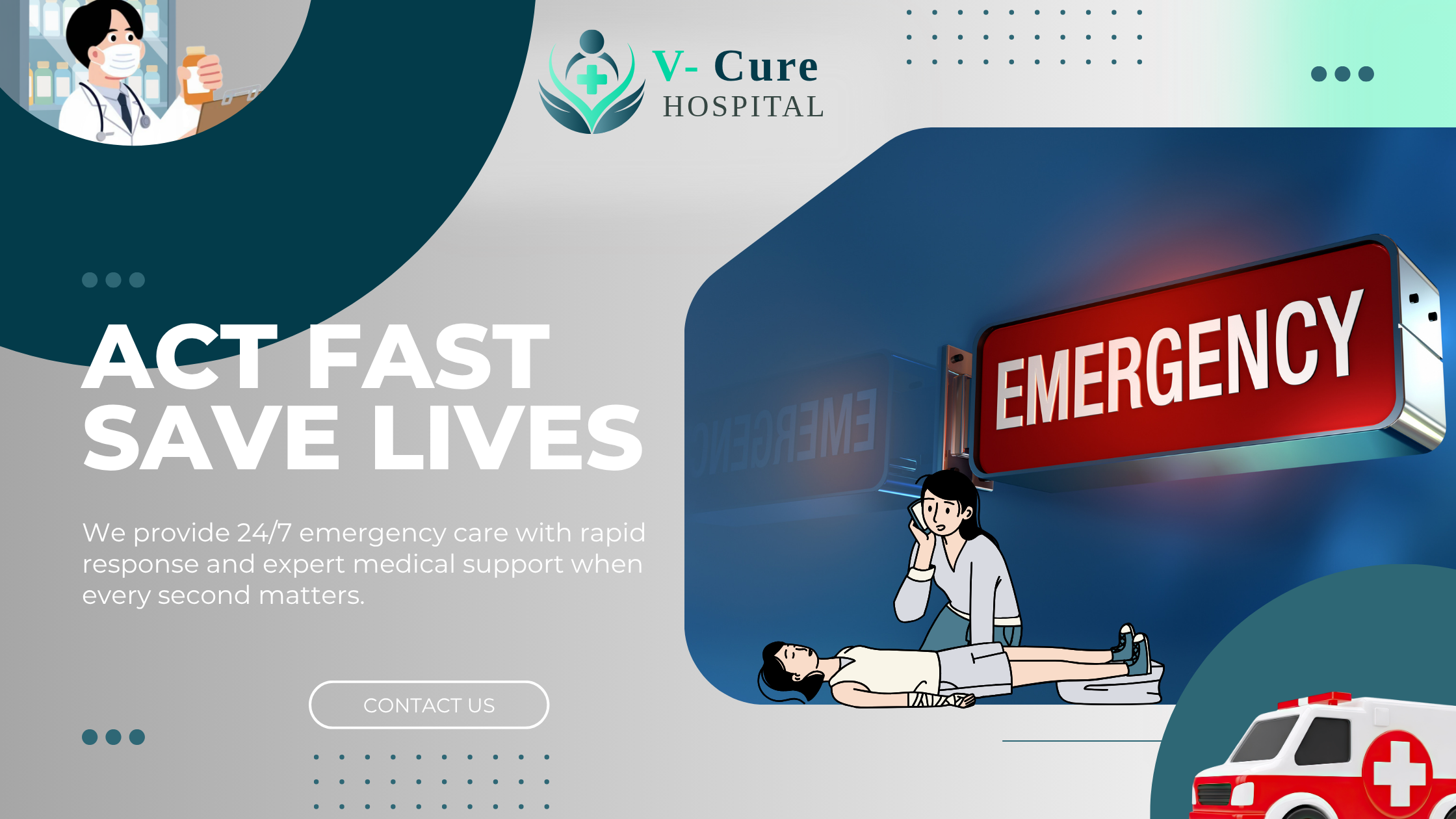
Medical emergencies can happen to anyone, anywhere, at any time. Knowing when a situation requires immediate emergency care — versus a routine doctor's visit — can be the difference between life and death. Acting quickly and decisively during a medical emergency can prevent permanent disability, organ damage, or loss of life. At V-Cure Hospital in Chennai, our emergency department is staffed round the clock with skilled medical professionals ready to respond to any emergency, 24 hours a day, 7 days a week.
What Is a Medical Emergency?
A medical emergency is any sudden illness, injury, or condition that poses an immediate threat to a person's life, long-term health, or bodily function and requires urgent medical intervention.
When to Call for Emergency Care Immediately
Cardiovascular Emergencies
- Chest pain or pressure: Severe, crushing, or squeezing chest pain — especially if it spreads to the left arm, neck, jaw, or back — may indicate a heart attack. Call for help immediately.
- Sudden palpitations with fainting: Irregular or racing heartbeat accompanied by dizziness or loss of consciousness requires urgent evaluation.
- Signs of cardiac arrest: No breathing, no pulse, unconsciousness — begin CPR and call for emergency services at once.
Neurological Emergencies
- Stroke symptoms (FAST): Face drooping, Arm weakness, Speech difficulty, Time to call — these are the warning signs of a stroke. Every minute counts.
- Sudden severe headache: A thunderclap headache (the worst headache of your life) can indicate a brain aneurysm rupture — seek immediate care.
- Seizures: Especially first-time seizures, prolonged seizures, or seizures without a known cause require emergency evaluation.
- Sudden confusion or altered consciousness: Sudden, unexplained confusion, unresponsiveness, or inability to speak requires emergency care.
Breathing Emergencies
- Severe difficulty breathing or shortness of breath: Especially when sudden and severe — this can indicate asthma attack, pulmonary embolism, or heart failure.
- Choking: If someone is unable to speak, cough, or breathe due to a foreign object, act immediately with the Heimlich manoeuvre and call for help.
- Bluish discolouration of lips or fingertips (cyanosis): A sign of oxygen deprivation — an immediate emergency.
Trauma and Injury Emergencies
- Severe or uncontrolled bleeding: Deep wounds with continuous bleeding that cannot be controlled with pressure require emergency care.
- Head injuries: Any head trauma with loss of consciousness, confusion, vomiting, or seizures warrants immediate evaluation.
- Suspected fractures of the spine, pelvis, or femur
- Burns: Large, deep, or burns covering the face, hands, feet, or genitals are emergencies.
- Road traffic accidents: Even if the person appears stable, internal injuries may not be immediately visible.
Abdominal and Urological Emergencies
- Severe abdominal pain: Sudden, severe abdominal pain — particularly with rigidity or tenderness — can indicate appendicitis, pancreatitis, or bowel obstruction.
- Inability to urinate: Sudden inability to pass urine, especially with severe bladder pain, may indicate a urological emergency such as acute urinary retention.
- High fever with back or flank pain: May indicate a kidney infection (pyelonephritis) or urosepsis requiring immediate treatment.
Allergic Reactions
- Anaphylaxis: Severe allergic reactions causing throat swelling, difficulty breathing, a sudden drop in blood pressure, and hives are life-threatening emergencies requiring epinephrine and immediate medical attention.
Mental Health Emergencies
- Suicidal thoughts or attempts
- Severe self-harm
- Psychotic episodes with risk of harm to self or others
What to Do While Waiting for Help
- Stay calm and keep the patient as still and comfortable as possible
- Do not give food, water, or medications unless advised by emergency services
- Apply pressure to bleeding wounds
- If trained, perform CPR on unconscious patients with no pulse
- Send someone to meet the ambulance and direct emergency services
Common Mistakes That Delay Emergency Care
- Waiting to see if symptoms improve on their own
- Driving yourself to the hospital when calling an ambulance is safer
- Taking painkilling medications that mask important symptoms
- Underestimating symptoms in elderly patients or young children
V-Cure Hospital's Emergency Services in Chennai
Our emergency department in Chennai is equipped and ready to handle all medical emergencies:
- 24/7 emergency care with experienced emergency physicians
- Rapid triage and assessment
- Advanced resuscitation and trauma care
- Immediate access to ICU, surgical theatre, and specialist consultants
- Ambulance services with trained paramedics
In a medical emergency, every second matters. If in doubt, always seek emergency care — it is always better to be safe.
V-Cure Hospital, Chennai — Your trusted emergency care partner. We are here for you 24/7.

Book an Appointment
Get expert medical consultation at V-Cure Hospital. Fill the form and our team will contact you shortly.
Tags:


